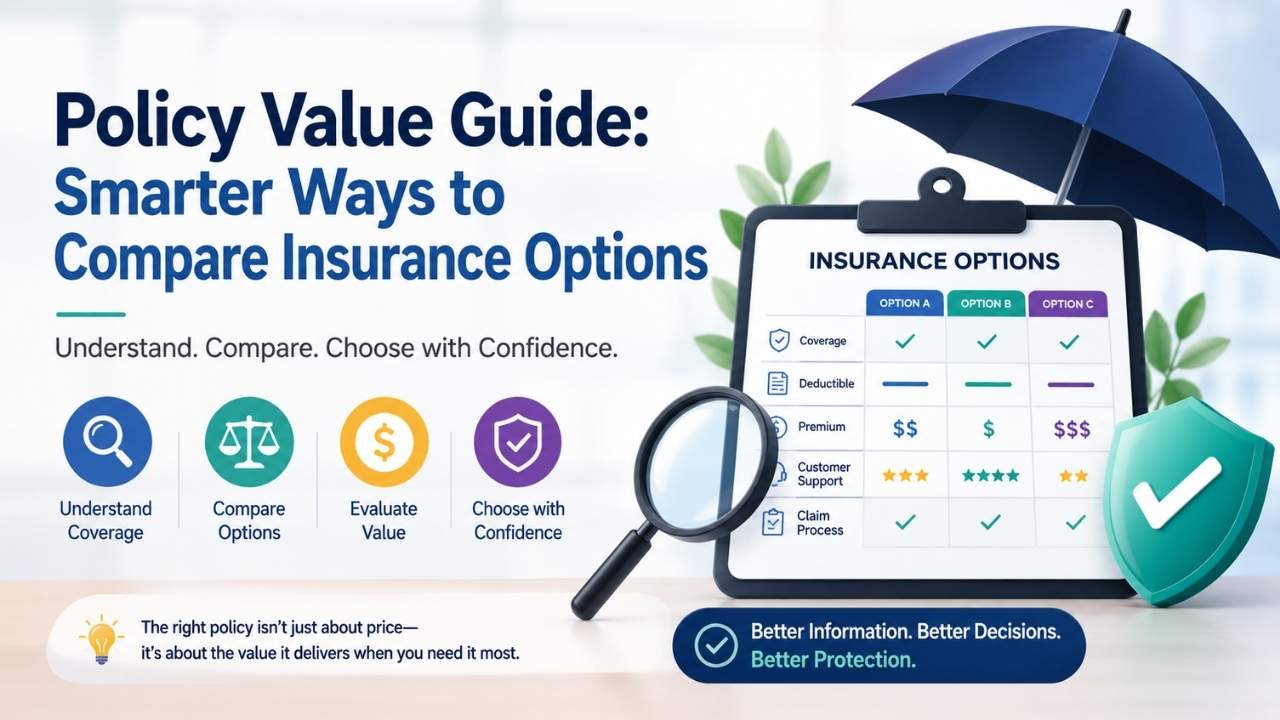
Insurance is one of the most important tools for financial protection, yet many people purchase policies without carefully comparing their options. Some choose plans based only on low premiums, while others rely on advertisements or quick recommendations from friends and agents. Although these approaches may seem convenient, they can lead to weak coverage, hidden costs, or disappointing claim experiences later.
A smart insurance decision requires more than simply finding the cheapest policy. The real value of insurance comes from how well it protects your finances, supports your lifestyle, and responds during emergencies. Comparing policies properly helps you understand the true benefits behind the price and allows you to choose coverage with greater confidence.
Whether you are buying health, life, vehicle, or home insurance, learning how to evaluate policy value can save money and improve your long-term financial security.
Start by Understanding Your Personal Needs
Before comparing different insurance options, it is important to understand your own financial situation and priorities. Every individual has unique responsibilities, risks, and future goals. A policy that works well for someone else may not provide the right protection for you.
Consider factors such as:
- Monthly income
- Family responsibilities
- Existing loans
- Health conditions
- Lifestyle habits
- Savings and investments
- Future financial goals
For example, a person with children may need stronger life insurance protection, while a young professional may focus more on affordable health and accident coverage.
Knowing your needs clearly helps you compare policies based on relevance rather than marketing promises.
Look Beyond the Premium Cost
One of the most common mistakes people make is choosing insurance based only on the lowest premium. Although saving money is important, cheaper policies often come with weaker benefits and higher financial risks during emergencies.
Low-cost plans may include:
- Limited coverage
- Higher deductibles
- More exclusions
- Restricted service networks
- Lower claim limits
Instead of focusing only on price, evaluate the complete value of the policy. A slightly higher premium may provide stronger financial protection, smoother claims, and better customer support.
Insurance should be viewed as long-term protection rather than a short-term expense.
Compare Coverage Carefully
Coverage is the heart of every insurance policy. Two plans with similar prices can offer completely different levels of protection.
When comparing coverage, pay attention to what situations and expenses are actually included.
Health Insurance Coverage
Review whether the policy covers:
- Hospitalization
- Emergency treatment
- Surgeries
- Medicines
- Diagnostic tests
- Pre and post-hospitalization care
Life Insurance Coverage
Check details related to:
- Death benefits
- Accidental coverage
- Critical illness riders
- Income replacement support
Vehicle Insurance Coverage
Compare protection for:
- Accidents
- Theft
- Natural disasters
- Third-party liabilities
- Repair expenses
The stronger and more practical the coverage, the greater the policy value becomes.
Understand Policy Exclusions
Exclusions are situations where the insurer will not provide financial support. Many policyholders ignore this section, only discovering limitations after filing claims.
Common exclusions may involve:
- Pre-existing illnesses
- Cosmetic procedures
- Negligent driving
- Illegal activities
- High-risk sports or travel
Understanding exclusions helps prevent confusion and disappointment later.
A good comparison process always includes reviewing what is not covered alongside what is included.
Evaluate Deductibles and Co-Payments
Deductibles and co-payments directly affect how much you pay during a claim.
Deductible
A deductible is the amount you must pay before the insurer contributes toward covered expenses.
Co-Payment
A co-payment requires the policyholder to share a percentage of claim costs.
Policies with lower premiums sometimes include higher deductibles or co-payments, which can create unexpected financial pressure during emergencies.
Comparing these details carefully helps you identify policies that balance affordability with practical financial protection.
Check the Claim Settlement Process
A policy’s true value becomes clear during the claim process. Even strong coverage can become frustrating if claims are delayed or handled poorly.
Before choosing an insurer, research:
- Claim settlement ratio
- Customer feedback
- Processing speed
- Customer service quality
- Digital claim support options
An insurance company with efficient claim handling often provides greater peace of mind than one offering slightly cheaper premiums.
Reliable support during emergencies is one of the most valuable features any policy can provide.
Consider Additional Benefits
Many insurance plans include extra features that improve long-term value. These benefits may seem minor initially but can become very useful over time.
Examples include:
- No-claim bonuses
- Wellness rewards
- Free health checkups
- Cashless hospitalization
- Roadside assistance
- Flexible renewal options
When comparing policies, evaluate whether these additional features genuinely support your lifestyle and future needs.
Useful benefits can increase convenience and reduce overall expenses later.
Research the Insurance Company’s Reputation
The insurance company itself plays a major role in the overall policy experience. A trustworthy insurer with strong financial stability and customer support can make difficult situations easier to manage.
Before making a decision, review the company’s:
- Financial strength
- Years of experience
- Customer satisfaction ratings
- Market reputation
- Transparency in communication
Reading real customer experiences can also provide insight into how insurers handle claims and policyholder concerns.
Confidence in the insurer strengthens confidence in the policy itself.
Review Policies Regularly
Insurance should never remain unchanged for years without review. As life changes, your financial responsibilities and risks also evolve.
Major events that may require policy updates include:
- Marriage
- Career growth
- Having children
- Purchasing property
- Retirement planning
Reviewing your insurance annually helps ensure your coverage continues meeting your current needs.
Regular reviews also allow you to compare newer plans and identify better options available in the market.
Avoid Emotional Buying Decisions
Insurance decisions should always be practical and informed. Many people buy unsuitable policies because of pressure from sales agents or emotional advertising that focuses heavily on fear.
Take time to compare options calmly and carefully. Read policy documents thoroughly, ask questions, and avoid making rushed decisions.
The right insurance policy should support your financial goals rather than create confusion or unnecessary stress.
Seek Professional Guidance if Needed
Insurance comparisons can sometimes feel overwhelming because of technical terms and complicated coverage structures. Consulting a trusted financial advisor can help simplify the process.
A good advisor can:
- Explain policy terms clearly
- Compare coverage objectively
- Identify unnecessary costs
- Recommend suitable plans based on your goals
However, always ensure recommendations focus on your needs rather than sales targets.
Informed decisions lead to stronger financial confidence.
Final Thoughts
Comparing insurance policies wisely is one of the smartest ways to protect your financial future. True policy value comes from meaningful coverage, reliable claim support, fair pricing, and long-term flexibility.
By understanding your needs, reviewing coverage carefully, researching insurers, and comparing all policy details beyond premium costs, you can make insurance decisions with greater confidence and clarity.
